
Overview
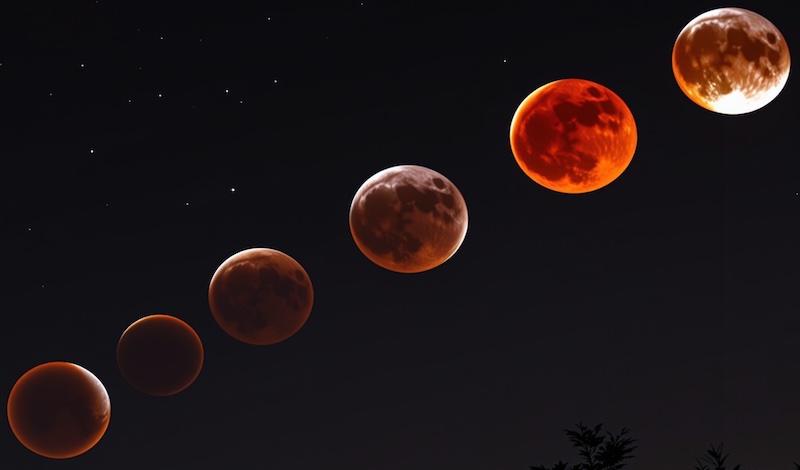
A total lunar eclipse is set to occur overnight from September 7 to September 8, 2025, creating a spectacular “blood moon” visible to millions across Asia, Western Australia, and Europe. The eclipse will reach its maximum phase at 5:11 p.m. EDT (21:11 GMT) on September 7, with totality lasting approximately 82 minutes.
Key Viewing Times
The totality of the lunar eclipse will be visible at different times across various regions:
London (BST): 7:30 p.m. – 7:52 p.m. (Sept. 7)
Paris (CEST): 7:30 p.m. – 8:52 p.m. (Sept. 7)
Cape Town (SAST): 7:30 p.m. – 8:52 p.m. (Sept. 7)
Istanbul/Cairo/Nairobi (EEST/EAT): 8:30 p.m. – 9:52 p.m. (Sept. 7)
Tehran (IRST): 9:00 p.m. – 10:22 p.m. (Sept. 7)
Mumbai (IST): 11:00 p.m. (Sept. 7) – 12:22 a.m. (Sept. 8)
Bangkok (ICT): 12:30 a.m. – 1:52 a.m. (Sept. 8)
Beijing/Hong Kong/Perth (CST/HKT/AWST): 1:30 a.m. – 2:52 a.m. (Sept. 8)
Tokyo (JST): 2:30 a.m. – 3:52 a.m. (Sept. 8)
Sydney (AEST): 3:30 a.m. – 4:52 a.m. (Sept. 8)
Approximately 77% of the global population will have the opportunity to witness the entire total phase of the eclipse.
Viewing Options
For those unable to observe the eclipse in person, various free livestreams will be available, including one hosted by Space.com. Updates will also be provided through a live blog.
Eclipse Phases
The eclipse will begin as the moon enters Earth’s penumbral shadow, resulting in a subtle shading effect. As the moon moves deeper into the umbra, a dark shadow will cover its surface, culminating in “totality,” where the moon will take on a reddish-orange hue. The exact color of the blood moon will depend on Earth’s atmospheric conditions at the time.
Additional Information
This lunar eclipse coincides with the moon’s perigee, which is its closest point to Earth, making it appear slightly larger than usual. The total eclipse will occur deep within Earth’s umbra, resulting in a rich, dark red appearance.
Viewing Conditions
Observers in Asia and Australia will have the advantage of the moon being high in the sky during totality, while viewers in Europe and Africa will see the moon rising at dusk. Unfortunately, the Americas will not be able to witness this event.