
Overview
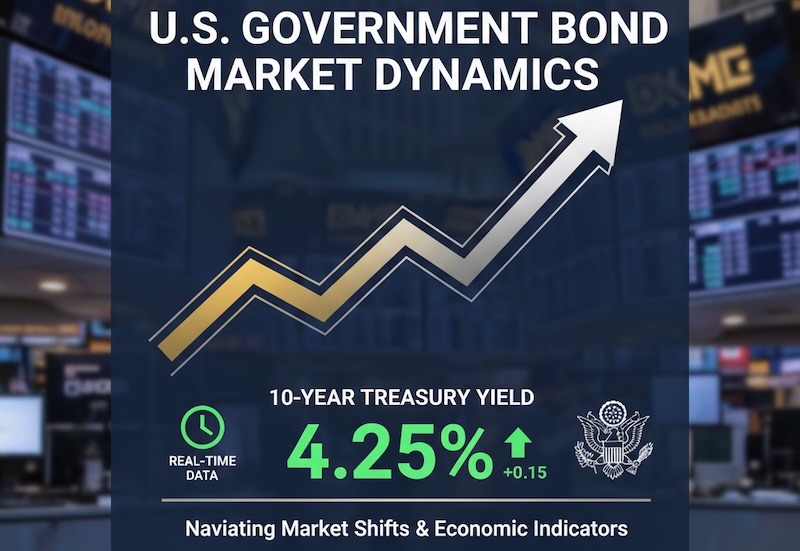
The U.S. government bond market has diverged from global trends, influenced notably by Treasury Secretary Scott Bessent. Despite rising debts worldwide, U.S. Treasury yields, particularly the 10-year government bond, have moved in a different direction compared to international sovereign bonds.
Yield Comparisons
U.S. vs. International Yields: As of the latest data, international yields have increased by 0.1131 percentage points, while the U.S. 10-year Treasury yield has decreased by 0.3038 percentage points.
Data Sources: This analysis is based on calculations from Barron’s and Dow Jones Market Data, which averaged changes in yields from various countries including the U.K., France, Germany, and others.
Influence of Treasury Secretary Scott Bessent
Bessent’s Role: Since his swearing-in on January 28, Bessent has actively discussed lowering 10-year Treasury yields, suggesting that government policies can influence bond prices.
Market Reaction: Analysts like Tavis McCourt from Raymond James believe that Bessent’s vocal stance is attracting investors to the U.S. bond market, which is perceived as more stable compared to other nations.
Market Dynamics
Investor Behavior: There seems to be a capitulation among global bondholders, allowing Bessent to effectively “jawbone” the 10-year yield lower.
Treasury Market Perception: A Treasury spokesperson emphasized the U.S. market’s safety and liquidity, attributing its strength to various factors including strong tariff revenues and a robust fiscal outlook.
Criticism of Predecessor
Accusations Against Janet Yellen: Bessent has criticized former Treasury Secretary Janet Yellen for allegedly manipulating financial conditions to lower long-term rates. A paper by economist Nouriel Roubini and Stephen Miran supported these claims.
Factors Supporting Lower Yields
Corporate Bond Yields: Yields on corporate bonds are at their lowest relative to Treasury yields since 1998, prompting investors to prefer Treasuries for safety.
Market Liquidity: The U.S. Treasury market is viewed as more liquid and resilient compared to those in the U.K., Japan, or Germany.
Limited Supply: Bessent has indicated that there will be no increase in the issuance of longer-dated debt for several quarters, which helps maintain higher prices and lower yields.
Broader Economic Context
Concerns vs. Optimism: Despite concerns about the U.S. debt level and spending, the belief that the Federal Reserve may soon cut interest rates is supporting Treasury prices. Phillip Wool from Rayliant Global Advisors noted that current market actions are influenced more by expectations of rate cuts rather than long-term structural debt issues.
Conclusion
The U.S. Treasury market’s unique position, driven by Bessent’s strategies and various economic factors, has led to a notable divergence from global bond trends. This situation reflects a complex interplay of investor behavior, government policy, and market perceptions, shaping the current landscape of U.S. government bonds.